Radon mitigation for your home
Radon seeps up into houses, trailers and modular homes, and builds up most in basements and crawl spaces. If your number is high, we fix it.

No question matches that yet. Call 250-777-3282 or ask us through Get a quote.
Radon is a colourless, odourless gas created as uranium breaks down in the soil over time. As that happens beneath us, the gas travels up through the soil and comes straight out of the ground. Outdoors, it safely spreads out into the air. Indoors, it can get trapped and build up.
Long-term exposure to high radon levels is a recognized health risk that gradually raises the chance of lung cancer over time. According to Health Canada, it is the leading cause of lung cancer among non-smokers. It's easy to test for, and it can be fixed.
Yes. Elevated radon is very common throughout the Kootenays because of our unique geology. As we heat and close up our houses through the colder months, radon rises from the soil and builds up inside. Every foundation and patch of soil is different, so indoor levels change from house to house. Testing your own home is the only way to know where you stand.
Anywhere the house meets the earth. Concrete slabs, foundation walls and footings rest directly against the soil, so soil gas collects around the base of your home. As warm air inside rises and escapes through the upper floors and roof vents, it creates a slight vacuum below, known as the "stack effect". That steady low pressure draws radon out of the ground and pulls it inside through porous concrete, unsealed foundation joints, floor drains, sump pits and crawl spaces.
In Canada, 200 becquerels per cubic metre (Bq/m³) is the action level set by Health Canada. If a long-term test shows your home is above 200, Health Canada recommends lowering it: within two years if it's between 200 and 600, or within one year if it's over 600. No level of radon is completely risk free, so many homeowners choose to lower their levels even when they're below 200.
With a long-term test of at least three months, ideally through fall and winter while the house is closed up. Short tests of a few days aren't recommended, because radon swings a lot from day to day. We rent out digital monitors, the library lends them for free, or you can buy your own. If you buy one, it's worth paying a bit more for a good brand like Airthings or Ecosense: the cheap monitors aren't as reliable.
Send it to us through the Get a quote form or call 250-777-3282. We'll tell you straight what your number means. If it needs fixing, we'll come and look at your home, then send you a quote you can approve online. Quotes are free.
Canada's national guideline is 200 Bq/m³, and Health Canada recommends action if your home is above it. Even so, many homeowners choose to act when their number is below 200. Other countries set the bar lower: the U.S. Environmental Protection Agency (EPA) recommends fixing homes at 148 Bq/m³ (4 pCi/L), and the World Health Organization suggests 100 Bq/m³. Because radon is a cumulative, long-term health risk, lowering your exposure as much as is practical is always better for your indoor air.
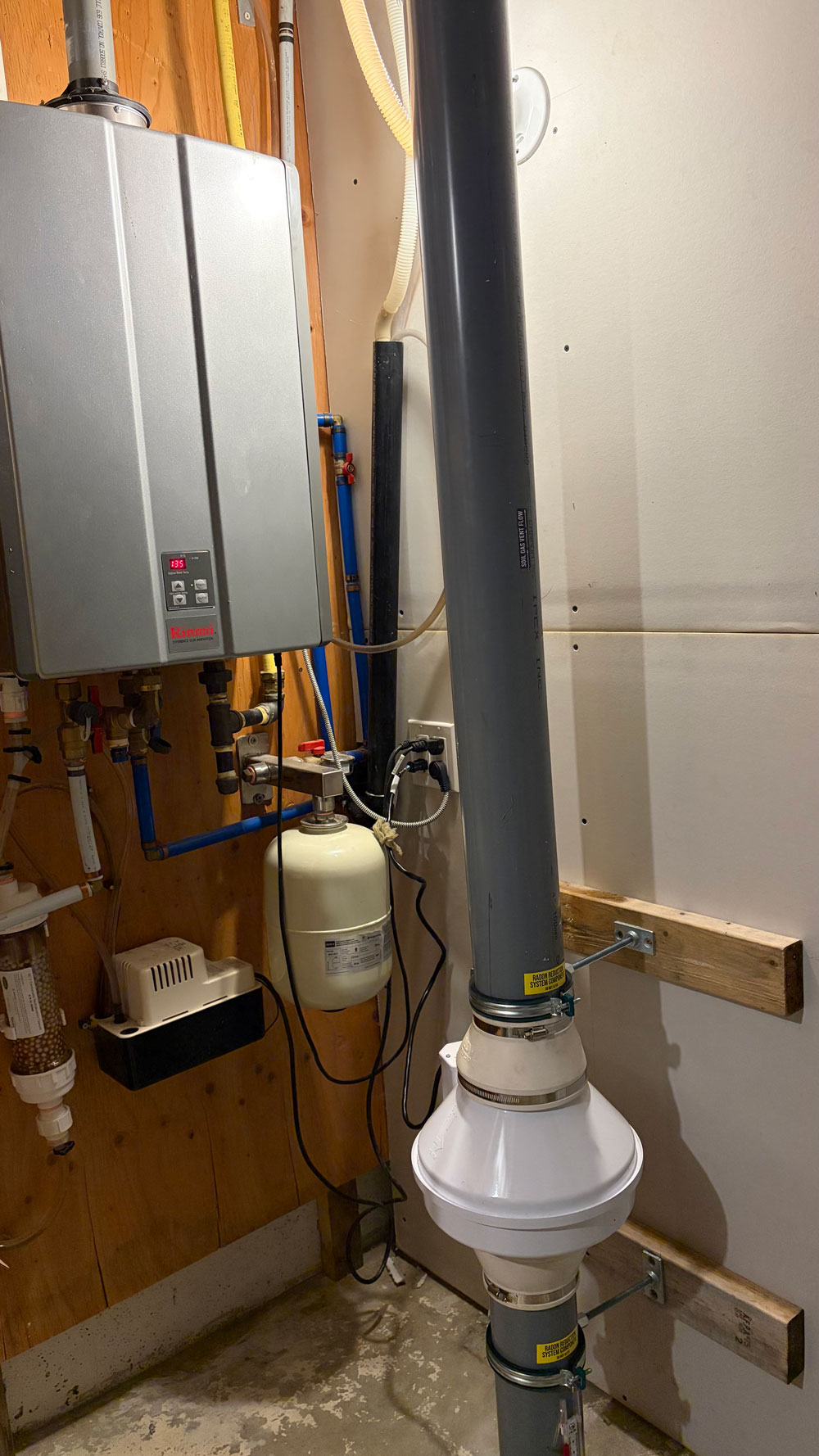
The standard and most effective method is called active soil depressurization. It changes the air pressure under your foundation so radon is drawn away from your living space: a quiet, continuous radon fan creates negative pressure underneath your home, catching soil gases and venting them safely outside. The install adapts to your foundation. Under a concrete floor, we drill a 5-inch hole through the slab to make a suction point; the fan connects to it and pulls the radon into a sealed PVC pipe and outside. In a crawl space, we lay perforated pipe around the edge, cover the ground with a heavy-duty vapour barrier and seal it tightly to the walls; the fan draws the radon through the pipe from under the membrane and up and out of the house. Either way, the gas follows the path of least resistance up a sealed pipe and out through the side or roof of the house, where it disperses harmlessly into the open air. Health Canada says a well-installed system can lower radon by more than 90%.
Most homes are done in a single day. Larger properties, complex crawl spaces, or homes with more than one separate slab can take a bit longer. We always check your layout and give you a clear, honest timeline before any work begins, so you know exactly what to expect.
The fan runs at about the volume of a quiet bathroom exhaust fan, a low hum that everyday household sounds usually cover. Some people don't hear it at all; others notice it for a while until they're used to it. We route the pipe away from patios, decks and bedroom windows, and an inline muffler can quieten the airflow further. We plan where the pipe goes with you, so it's tidy and out of the way wherever the house allows.
Most systems in the West Kootenays cost between $3,000 and $5,000. A few unusual houses need more work and can run to about $8,000. Every house is different, so we quote once we've seen it, and the quote is free.
Quotes and site visits have no travel charge. Installs include travel at $1 per kilometre, round trip, from our base in South Slocan.
Test again once the system is running. It's the only way to be certain. With a digital monitor or test kit in your home, you can watch your radon level drop and confirm the system is doing its job. We rent out digital monitors if you don't have one.
If your readings don't drop to where they should be, we don't walk away. We come back, reassess the system and troubleshoot until the job is done right. That might mean adjusting the fan, adding a second suction point, or changing the layout to catch every pocket of air. If any adjustments or extra work are needed, we'll always explain the situation, give you clear pricing upfront, and let you decide how you'd like to go ahead.
The fan carries a five-year manufacturer's warranty.
By e-transfer, or by card through the link on your invoice. Invoices are due within seven days.
Yes. Radon often comes up during a home inspection, and we work with local realtors and home inspectors. Tell us your dates when you get in touch and we'll do our best to work around them.
Not always. Many newer homes have a passive system: a pipe under the slab with no fan on it. On its own it doesn't always keep levels down, so test first. If your numbers are elevated, adding a fan to the pipe is often quick and easy.
We can, with your landlord's OK, because the system becomes part of the building. We're happy to talk to your landlord about your reading.
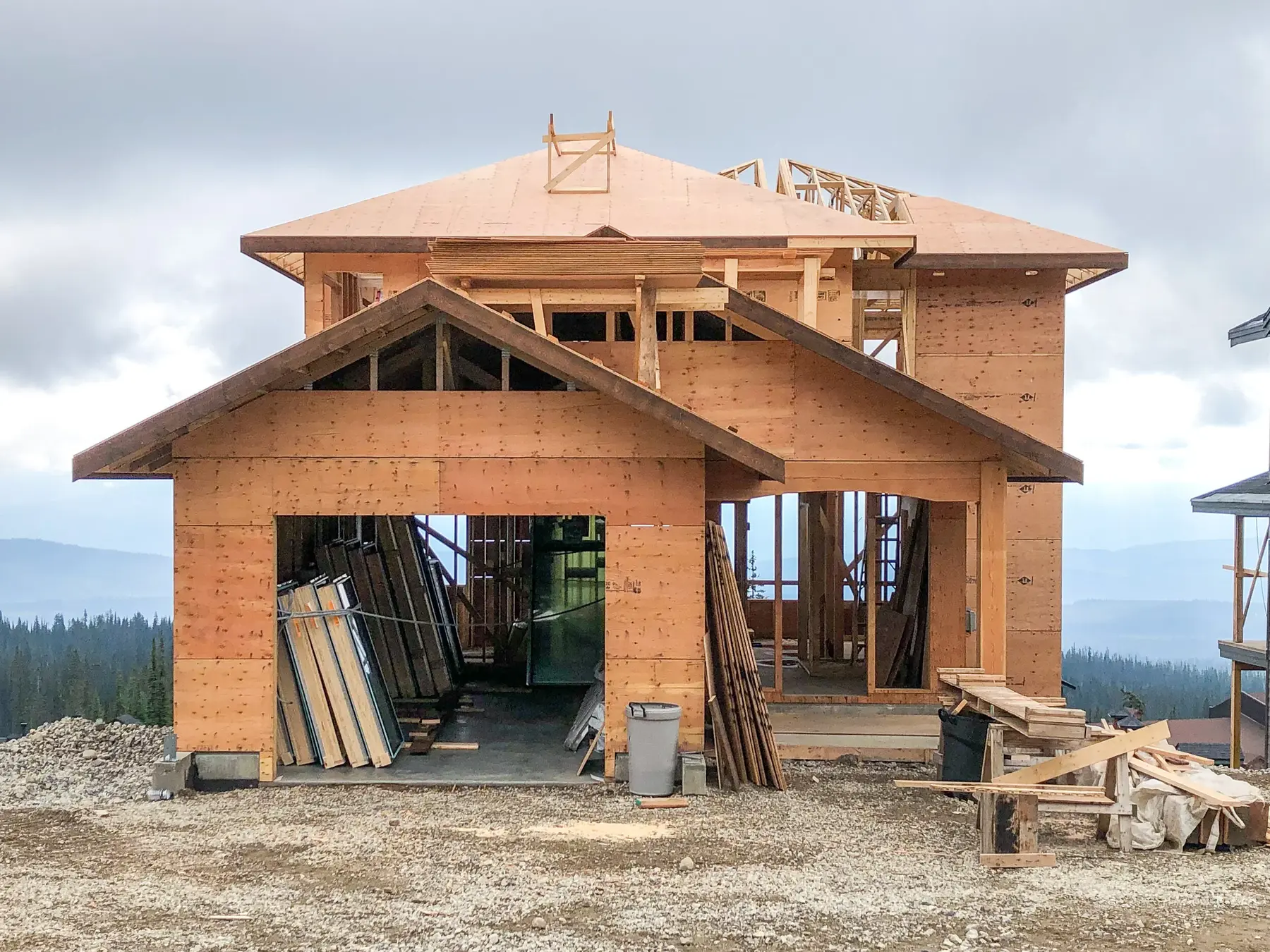
Here in the Kootenays, new homes have needed a radon rough-in under the BC Building Code since 2015, and since March 2024 the rule covers the whole province. We can put it in properly while the build is underway, so it's ready for a fan if a test shows you need one later. Talk to us before the slab goes in.
Right across the West Kootenays: Nelson, Castlegar, Trail, Rossland, Fruitvale, Kaslo, Salmo, Nakusp, the Slocan Valley and the communities in between. Further afield, like Christina Lake, Creston, Cranbrook or Revelstoke? Ask us, we travel.
Yes. Pete is certified by the Canadian National Radon Proficiency Program (C-NRPP), which certifies radon professionals in Canada, and Radon Boss is fully insured. Every system is built to Health Canada's guidance and C-NRPP standards.
Yes. If you send someone our way, we'll send you $40 once their job is booked. Just ask them to mention your name when they get in touch.
Radon seeps up into houses, trailers and modular homes, and builds up most in basements and crawl spaces. If your number is high, we fix it.
Putting radon protection in while the house is being built is the simplest and most affordable way to do it.
Send it to us and we'll tell you straight what it means. Quotes are free.
Know someone who hasn't tested? Send them our way. We send you $40 once their job is booked.